
Wedding Planning: What to Do 12 Months Ahead
The essential first steps in your wedding planning—from budget and guest list to venue and vendors.
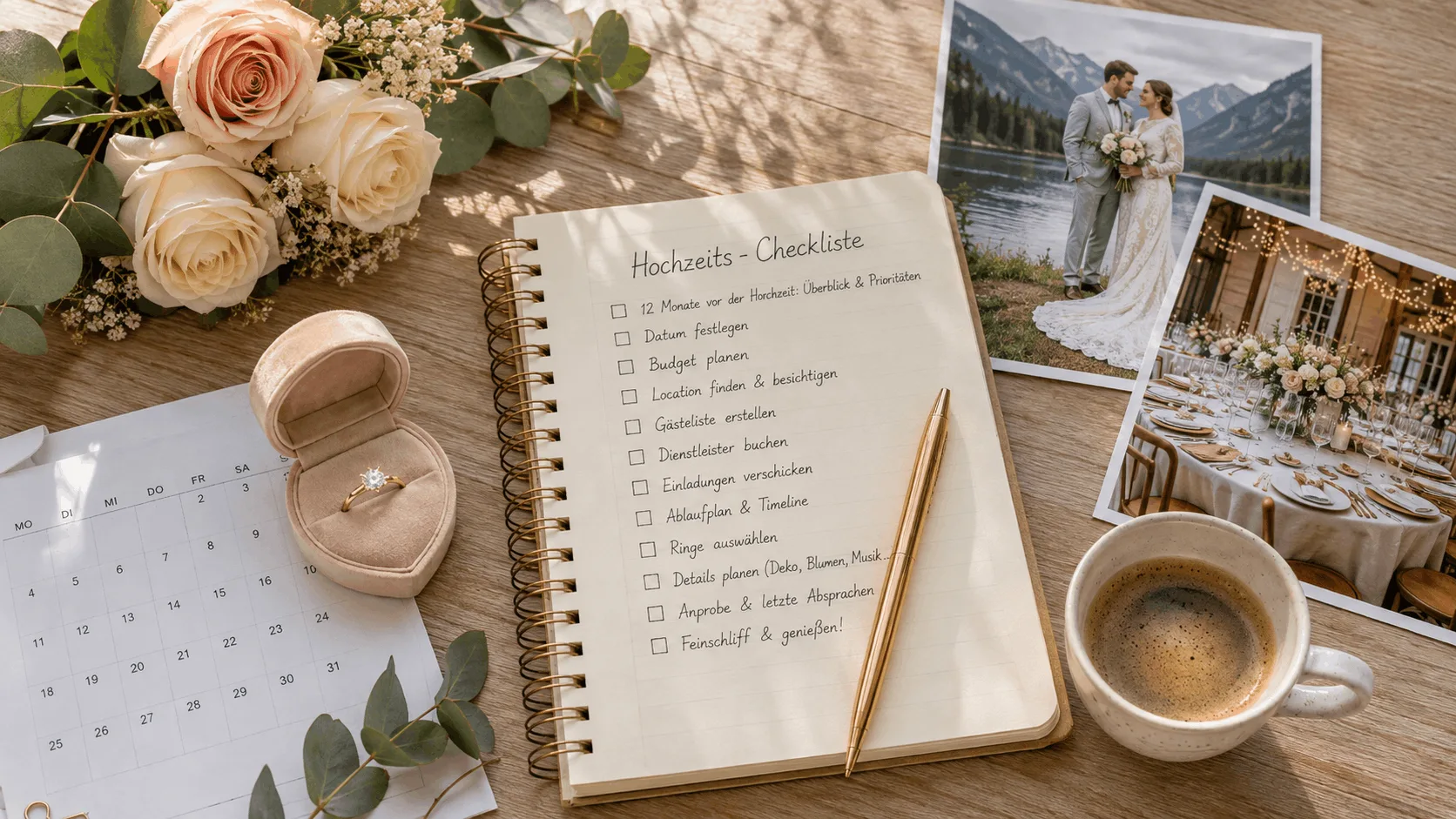
Your wedding is still about a year away—and suddenly it feels like you have a hundred decisions to make all at once.
But you don’t need to decide every detail just yet. What matters most is getting the big-picture decisions in the right order.
This overview will help you approach the first few months in a structured way.
1. Set your budget
Before you visit venues or contact vendors, decide what budget you want to plan around.
Talk through these questions together:
- What total budget feels realistic for you?
- Will you receive financial support from family or anyone else?
- Which expenses matter most to you?
- Where would you consciously like to spend less?
Your budget doesn’t need to be precise down to the last dollar at this stage. Above all, it should help you assess quotes sensibly later on.
2. Create a preliminary guest list
Your guest count affects many other decisions—especially your venue and budget.
So start by sorting people into a few groups:
- People who absolutely have to be there
- People you’d really love to invite
- People you haven’t decided about yet
This first guest list isn’t your final invitation list.
It simply gives you a realistic estimate of the numbers.
3. Choose a time frame for your wedding
If you don’t have a specific date in mind yet, a preferred time frame is enough for now.
For example:
- Spring 2027
- August or September
- Preferably a Saturday
- Friday as an alternative
The more flexible you are about the date and day of the week, the more options you’ll often have when it comes to venues and vendors.
4. Start looking for a venue
Once you’ve settled on a budget, approximate guest count, and time frame, you can start comparing venues with your needs in mind.
Don’t focus on appearances alone.
Important things to consider include:
- maximum guest capacity
- venue hire fee
- catering arrangements
- drinks
- closing time
- accommodation options
- backup plan for bad weather
- setup and takedown times
- items and equipment included
- additional fees
Make a note of any unanswered questions right after each viewing. After several visits, it’s easy for the details to blur together.
5. Decide what matters most to you
Every couple has different priorities.
Perhaps these are especially important to you:
- an exceptional venue
- great food
- high-quality photos
- a big party
- live music
- decorations
- a relaxed atmosphere
Agree on three to five priorities together.
This will make it easier to decide what to do later when budget, time, or different wishes compete with one another.
6. Start reaching out to key vendors
Some vendors are often booked well in advance.
These may include:
- photographer
- videographer
- DJ or band
- independent wedding celebrant
- caterer, if catering isn’t provided by the venue
You don’t need to book every vendor at once.
Start with the services that matter most to your wedding and where availability is a major factor.
7. Keep all your planning in one place
As planning progresses, a lot of information can quickly pile up:
Quotes, appointments, tasks, contacts, invoices, guest details, and decisions.
So decide early on where you’ll keep your central wedding plan.
This helps you avoid having important information scattered across chats, emails, notes, and different spreadsheets.
What really needs your attention now
If your wedding is about twelve months away, you don’t need to have everything figured out yet.
For now, focus on:
- budget
- preliminary guest list
- time frame or date
- venue
- personal priorities
- key vendors
- a shared planning system
After that, it will be much easier to work out what comes next.
Good wedding planning doesn’t mean getting everything done right away. What matters is knowing what’s important next.
TRAUKLAR – Know what needs your attention now.