
How to Find and Compare Wedding Vendors with Confidence
Photography, music, flowers and catering differ in more than just price. A structured comparison helps you assess services, communication, extra costs and unanswered questions before you book.
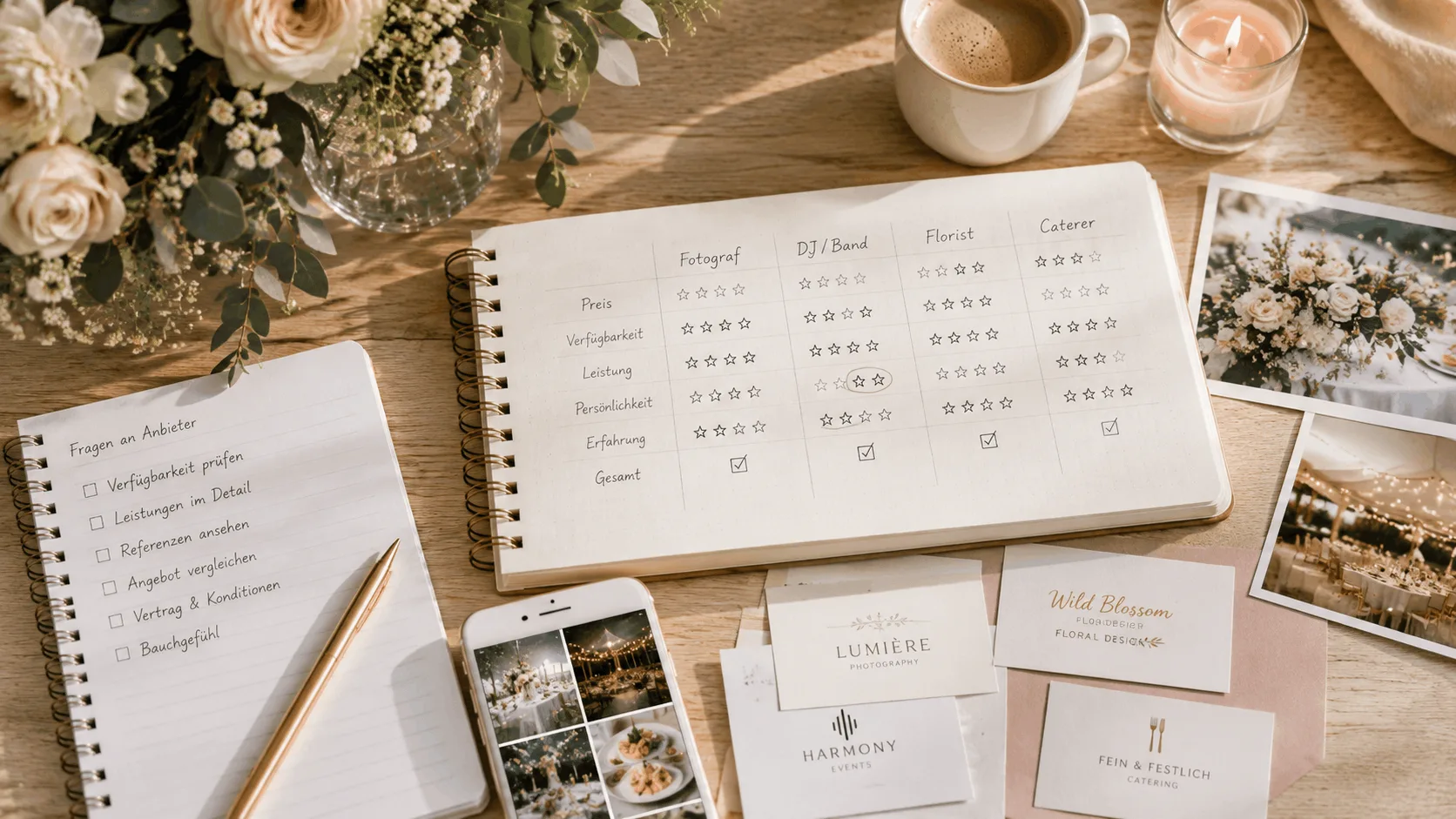
When choosing wedding vendors, you’re rarely deciding between prices alone.
You’re choosing between different ways of working, personalities, service offerings and levels of experience.
That’s why offers can quickly become difficult to compare.
One photographer offers eight hours of coverage, another ten. One DJ quotes an all-inclusive price, while another charges extra for equipment and travel. Florists’ quotes may include different quantities and setup services.
The answer isn’t to try to make every offer identical.
It’s to ask every option the same questions.
Start by clarifying what you really need
Before contacting vendors, briefly note down the following for each category:
- What do we want this service to do for us?
- What’s essential?
- What would be nice to have but is optional?
- What’s our budget range?
- When will we need the service?
For photography, for example, this might mean:
- We want the ceremony and reception documented
- We’d like a short, natural couple’s shoot
- Group photos are important
- An album is optional
This clarity helps you make a better inquiry and compare the responses.
Don’t contact too many vendors at once
Contacting ten or fifteen vendors in each category may seem thorough at first.
But it often creates more chaos rather than helping you make better decisions.
Instead, shortlist a few options that seem like a good fit.
A good shortlist can be based on:
- Style
- Location
- Availability
- Service description
- Professional presentation
- Clear contact details
- Recommendations
- Relevant examples of their work
Then send a specific inquiry.
A good inquiry saves follow-up questions
Give vendors the information they need to assess your request right away.
Typically, this includes:
- Wedding date
- Town or venue
- Approximate guest count, if relevant
- Services you’re looking for
- Planned timeframe
- Any special requests
Still, don’t write an endless message.
The goal is to send an inquiry that a vendor can respond to usefully.
Compare offers using the same criteria
Create a short comparison list for each vendor category.
For photography, for example:
- Duration
- Travel
- Image editing
- Delivery
- Additional hours
- Cancellation policy
- Payment schedule
For a DJ or band:
- Playing time
- Equipment
- Lighting
- Setup and takedown
- Song requests
- MC services
- Extensions
- Replacement in case of cancellation
For flowers:
- Types of arrangements
- Quantities
- Delivery
- Setup
- Removal
- Rental vases and containers
- Changes if the guest count changes
This helps you understand why two total prices differ.
Price matters—but it isn’t the only factor
A higher price may include more services.
A lower price may be perfect if it covers exactly the services you’re looking for.
What matters is how these factors compare:
- Your requirements
- Services included
- Working style
- Communication
- Total price
Don’t just ask:
Who’s cheaper?
Instead, ask:
Which offer is a better fit for what we actually need?
Communication is part of the service
You’ll get a sense of what it’s like to work together even before you book.
Pay attention to the following:
- Are your questions answered?
- Are the answers specific?
- Are costs explained clearly?
- Are response times reasonable?
- Do you feel understood?
- Are any limitations communicated openly?
No one has to reply within minutes.
Being reliable doesn’t mean being available around the clock. It means that communication is clear and professional.
For personal services, chemistry matters
With some vendors, you’ll spend a large part of your wedding day together.
This is especially true for:
- Photography
- Videography
- Wedding celebrants
- Wedding planning
- Sometimes DJs or MCs
That’s why a short introductory call can matter more than ten extra portfolio pages.
Afterward, ask yourselves:
- Can we relax around this person?
- Are our wishes respected?
- Did the conversation feel comfortable?
- Does their working style suit us?
Professional quality and personal fit go hand in hand here.
How to review portfolios
Portfolios naturally showcase a selection of particularly successful work.
So try not to focus only on individual highlights.
For photography or videography, you can ask whether it’s possible to see a more complete look at an entire wedding.
For flowers, examples in different sizes and styles can be helpful.
For music, references, audio samples or a conversation about your taste in music can help.
What matters isn’t whether a vendor has already worked on a wedding exactly like the one you’re planning. What matters is whether their quality and style feel consistent.
Confirm availability early
A general price list doesn’t mean your date is available.
Make sure to clarify:
- Is our date still available?
- How long can the date be held without obligation?
- When does the booking become binding?
- What deposit is required?
If you’re comparing multiple offers, keep track of their deadlines too.
This helps you avoid losing a suitable option without realizing it while you’re making your decision.
Make extra costs visible
Don’t just note the base price.
Also include:
- Travel costs
- Accommodation
- Additional hours
- Equipment
- Materials
- Setup
- Takedown
- Rental items
- Changes
- Shipping
For each item, you should be able to tell whether it is:
- Included in the price
- Optional
- Still unclear
Open questions aren’t minor details. Add them to your list of questions.
What should be put in writing?
For a binding booking, the key agreements should be clearly documented.
These typically include:
- Services
- Date
- Times
- Price
- Payment schedule
- Additional costs
- Important deadlines
- Terms for changes or cancellation
Which contract details matter in a particular case depends on the service.
Read all documents in full and ask questions if anything is unclear.
Keep things organized after booking
Signing the contract doesn’t mean a vendor disappears from your plans.
Continue keeping track of:
- Point of contact
- Contact details
- Outstanding tasks
- Next follow-up
- Payment dates
- Information needed
- Final service times
The closer the wedding gets, the more important this overview becomes.
A simple rating system
If you can’t decide between several suitable vendors, rate them against the same criteria.
For example, score each from 1 to 5:
- Style
- Services offered
- Price
- Communication
- Personal fit
- Flexibility
- Trust
The score isn’t meant to make the decision for you automatically.
But it does show why you’re leaning toward one option.
If one vendor scores well across the board, but you feel much more comfortable with another, that’s important information too.
Take warning signs seriously
One small mistake doesn’t have to be a deal-breaker.
But if problems keep happening, pay attention.
For example:
- Important parts of the price remain unclear over time
- Agreements keep changing
- Your questions are consistently avoided
- You’re pressured to book immediately without time to review things
- Promised documents never arrive
- Communication repeatedly seems contradictory
Your wedding isn’t a situation where you have to keep ignoring a persistent bad feeling.
Conclusion: Compare services, not just total prices
Choosing the right vendor depends on several factors.
Start by defining what you need. Make targeted inquiries. Then compare the same criteria every time.
Keep track of:
- Offers
- Services included
- Open questions
- Deadlines
- Decision
- Payments
- Next steps
This turns a pile of emails and PDFs into a clear decision-making process—and lets you book with much greater confidence.