
Finding a Wedding Venue: How to Know If It’s Right for You
A beautiful venue isn’t automatically the right one. This checklist helps you systematically assess capacity, costs, logistics, vendor policies and practical details before booking.
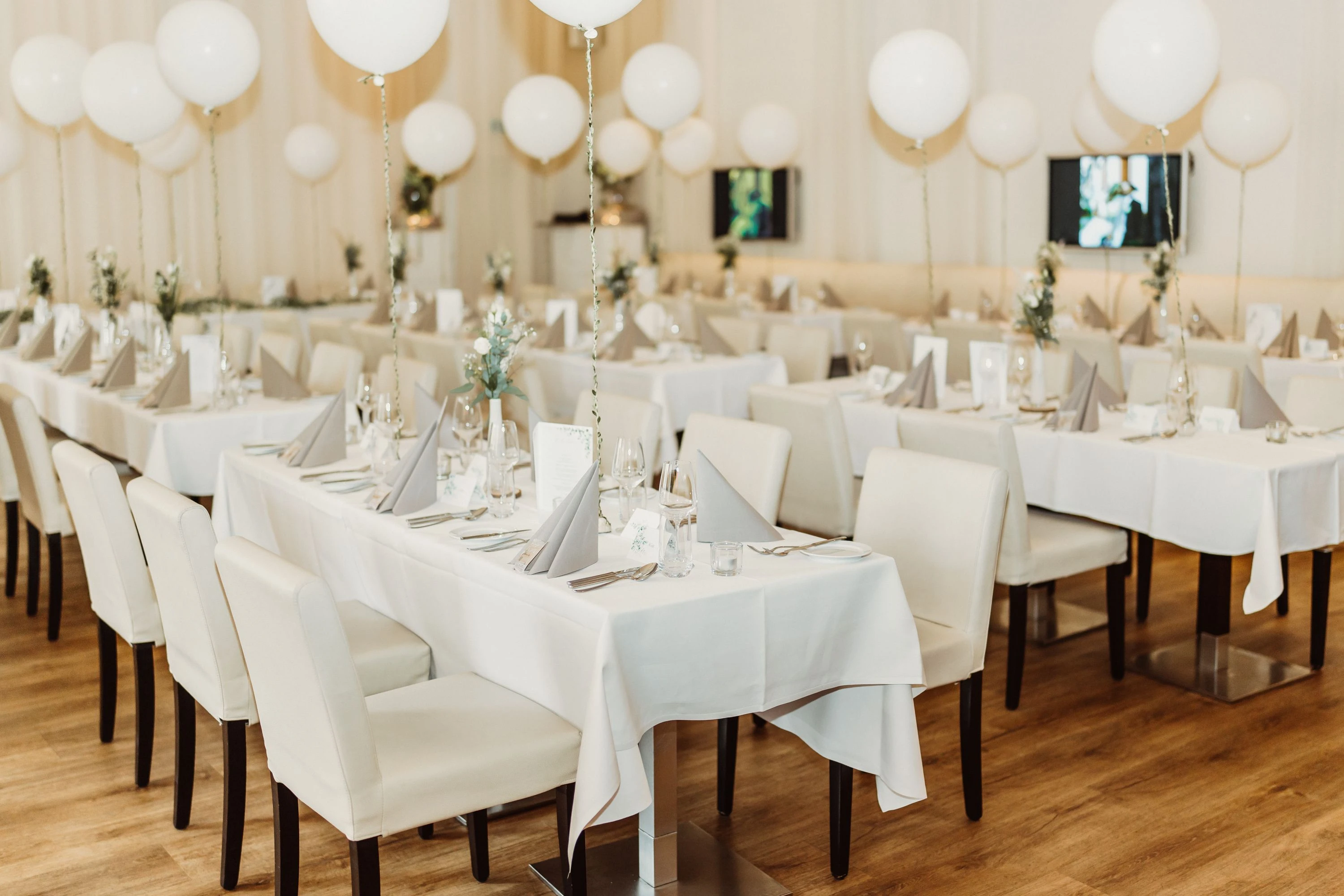
Your venue shapes your wedding more than almost any other single decision.
It affects how many guests you can invite, the schedule, catering, music, décor and often a large part of your budget.
That’s why you shouldn’t choose a venue based on photos alone.
A venue can look beautiful in pictures and still be a poor fit for your celebration. Conversely, a relatively simple space can work perfectly if the layout, service and conditions are right.
Before you start looking: Your key criteria
Start with a short list of what you’re looking for.
Not twenty details—just the things that really matter.
For example:
- Location
- Approximate guest count
- Indoor or outdoor space
- Preferred style
- Budget range
- Accommodation options
- Length of the celebration
- Choice of vendors, or a required vendor list
Mark three to five criteria as must-haves.
Everything else is a bonus.
This distinction helps you avoid falling in love with a venue that later turns out not to meet one of your essential requirements.
Be realistic about your guest count
Don’t just ask for the maximum number of people the venue can accommodate.
The more useful question is:
How many guests can comfortably fit in the room with our planned seating arrangement?
A venue might advertise a high maximum capacity that’s only possible with tightly packed seating or without a dance floor.
Be sure to clarify:
- Capacity with your preferred table layout
- Space for a dance floor
- Space for a buffet or service routes
- Space for equipment and the DJ
- Coat check
- Children’s area, if needed
- Outdoor areas
If possible, ask to see what the room looks like set up for a similar number of guests.
Your venue tour: Look beyond the décor
It’s easy to get caught up in the atmosphere and details during a venue tour.
Still, bring a structured list of questions.
Check:
- Where will guests arrive?
- Is there enough parking, or are there good alternatives?
- How far apart are the ceremony and reception spaces?
- Where will the drinks reception take place?
- What happens if it rains?
- Where can the couple take a break?
- Are there enough restrooms?
- Is the venue practical for your guests to get around?
- Where will vendors and suppliers be directed?
Walk through the wedding day in your mind.
From the first guest’s arrival to the end of the celebration.
A solid Plan B is not a minor detail
If an important part of your wedding is planned outdoors, you need a convincing alternative.
Don’t just ask:
“Is there a Plan B?”
Ask to see the actual space.
Check:
- Is there enough room for all your guests?
- Will it be set up in advance, or does it need to be rearranged at short notice?
- Can the ceremony take place there?
- Is equipment available?
- How will you decide when to switch to Plan B?
A Plan B you don’t like isn’t really a Plan B.
Understand the catering and drinks arrangements
Venues operate in very different ways.
Possible arrangements include:
- In-house catering
- Preferred vendors
- Choice of caterer
- Drinks package
- Paying for drinks based on consumption
- Minimum spend
Ask exactly what’s included in the quote.
Important details may include:
- Service staff
- Table linens
- Tableware and glasses
- Corkage fee
- Late-night snack
- Children’s rates
- Vendor meals
- Extension fees
- Setup and teardown
A low base price doesn’t tell you much if many essential services cost extra.
Which vendors can you choose freely?
Some venues work with preferred vendors or place restrictions on certain outside vendors.
Be sure to ask about:
- Choice of photographer
- DJ or band
- Florist
- Décor
- Equipment
- Cake
- Choice of celebrant
- Outside caterers
If you already have a key vendor in mind, ask about them early.
Music and how long the celebration can last
A beautiful venue won’t do you much good if you can’t have the party you’ve planned there.
Ask:
- How late can music play?
- Are there any volume limits?
- Do windows or doors have to stay closed after a certain time?
- Is live music allowed?
- Are there set end times?
- How much does an extension cost?
- By what time must the venue be completely vacated?
Also distinguish between:
- Music ending
- Bar service ending
- The event ending
- Teardown ending
These aren’t always the same time.
Setup, décor and teardown
Don’t wait until a few days before the wedding to ask when you can decorate.
Important details include:
- Access the day before
- Access on the wedding day
- Storage options
- Candle rules
- Restrictions on attaching items to walls or ceilings
- Confetti or other materials
- Teardown time
- Cleaning
If you’re planning to do a lot of the decorating yourselves, a very short setup window can add considerable stress.
Accommodation and getting home
The location is especially important if many guests are travelling from out of town.
Check for:
- Hotels nearby
- Rooms at the venue
- Taxi availability
- Shuttle options
- Public transport
- Overnight parking
Think about the end of the celebration, too.
“How will everyone get there?” is only half the planning. “How will everyone get home safely?” matters just as much.
Calculate the full cost
Put together a comparable total-cost estimate for each venue.
This may include:
- Room rental
- Minimum spend
- Food
- Drinks
- Staff
- Equipment
- Furniture
- Cleaning
- Extension fees
- Accommodation
- Additional rooms
Also note deposits and payment due dates.
This makes it easier to compare two venues, even when their pricing structures differ.
Document contracts and agreements
Don’t rely on verbal assurances for important details.
If a promise is crucial to your decision, it should be confirmed in the quote or contract—or at the very least, in writing in a way you can refer back to.
This is especially important for:
- Prices
- Exclusive use
- Curfews
- Included services
- Cancellation terms
- Plan B spaces
- Setup times
- Outside vendors
Take your time reading the documents before making a commitment.
Rate each venue straight after your tour
If you visit several venues, the details can quickly blur together.
Rate the same points for each venue straight after your visit.
For example, on a scale of 1 to 5:
- Atmosphere
- Logistics
- Value for money
- Accessibility
- Plan B
- Flexibility
- Communication
Also write down:
What did we love?
and
What are we still unsure about?
These two questions are often more revealing than an overall score.
Not every perfect venue will be available—and that’s okay
Your first choice may already be booked, especially for popular dates.
So try not to decide too early that one particular venue is the only right choice.
Look for several options that meet your must-haves.
Ultimately, your decision should be based on the complete package:
- It feels right for you
- It works logistically
- It suits your guest count
- It fits your budget
- You feel good about working with the venue
Conclusion: The right venue works behind the scenes, too
A wedding venue shouldn’t just look beautiful in photos.
It needs to support your wedding day.
So consider the atmosphere as well as the logistics, costs and rules.
If, after a tour, you can say not only “This place is beautiful” but also “We can see how our day would work here,” you’re very close to making a good decision.